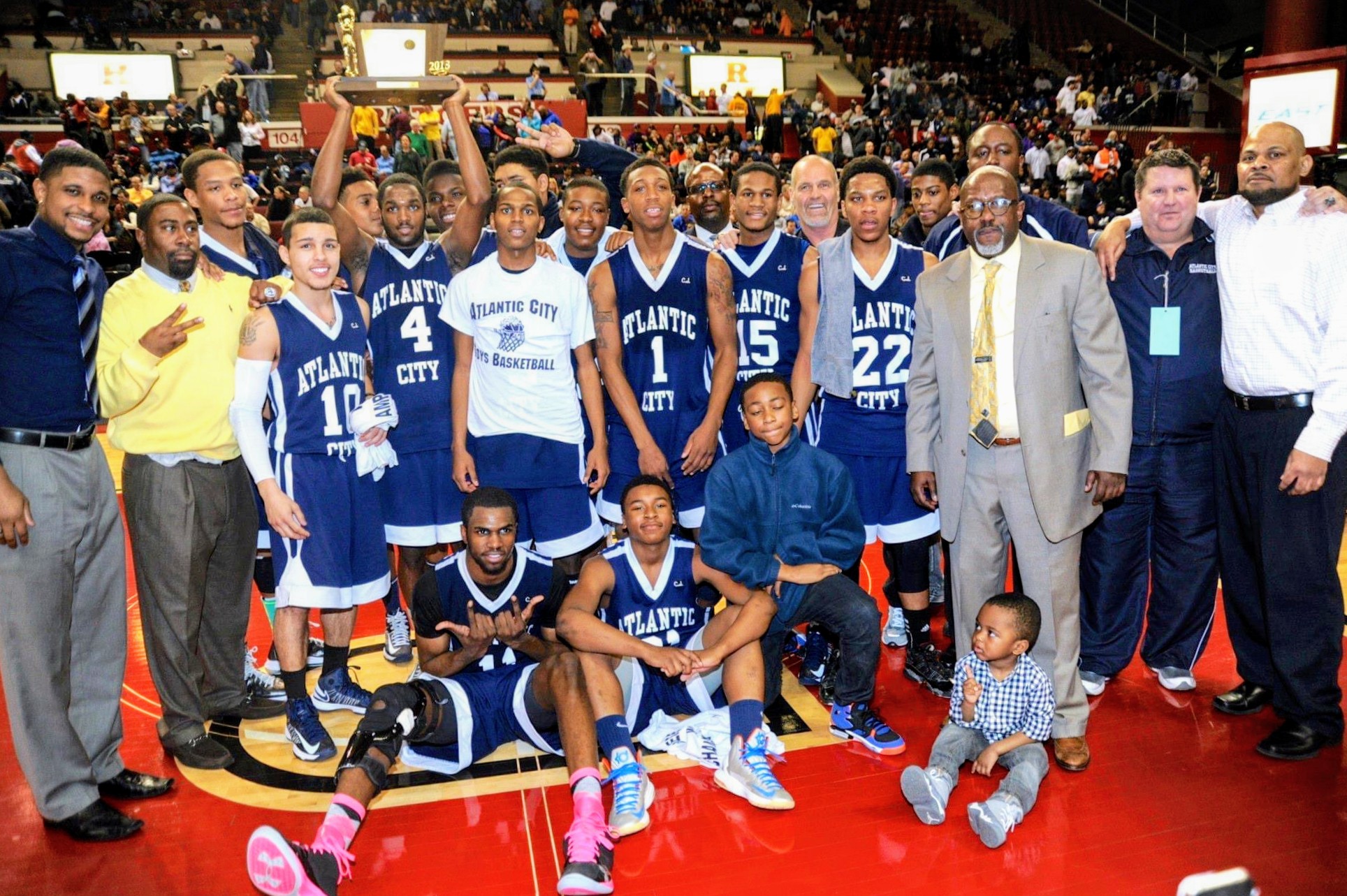
The 2005 Atlantic City basketball team made school history with a 56–42 win over Ridgewood in the Group IV state final. It was the Vikings’ first boys basketball state title. For the players and coaches, that championship moment reflected work and relationships built long before the final buzzer.
Jim Schafer Jr. served on the coaching staff. His memories reach beyond the score: purposeful practices, lessons from his father, dinners prepared by his mother, and players who still call him today. Those experiences help explain the legacy behind the Jim Knute Schafer Foundation.
How Atlantic City Basketball Built Toward a Championship
The turning point began a year earlier. According to Jim, 2004 was the coaching staff’s first season together. Atlantic City reached the South Jersey final but lost to Lenape, which went on to win the Group IV state title.
Getting close gave the Vikings something to build on. However, the staff knew the team needed to change to take the next step.
Jim recalls a fresh focus on practice. Every minute had a purpose. The coaches worked on offense, defense, out-of-bounds plays, individual skills and game situations. Each part of practice had to bring out the players’ strengths.
Defense became central to that approach. The Vikings needed to control the pace and direction of games. In Jim’s view, strong defense could travel with the team and help it overcome mistakes.
“Big Schafe” and the Lessons Beyond the Gym
To help teach those principles, Jim brought in his father, Jim “Knute” Schafer Sr. He was the man who had taught Jim the game. The players called him “Big Schafe,” and Jim remembers how much they loved him.
The lessons continued after practice. Players visited Jim Jr.’s home to talk basketball with father and son over dinners prepared by Peg Schafer.
A conversation about X’s and O’s became time together around a table. As the players learned more about the game, they also grew closer to the family helping them learn it.
Those dinners belong in the championship story alongside the practices and games. They show how the Schafer family made room for the young people they coached.
The 2005 State Championship Breakthrough
Under head coach Gene Allen, Atlantic City basketball reached a new milestone in 2005. The Vikings won their first boys basketball state championship by defeating Ridgewood, 56–42.
The NJSIAA championship history confirms the Group IV title. The Philadelphia Inquirer’s historical results record the final score.
The title belonged to the players, coaches and people who helped the team get there. For Jim, it also showed what the group had learned together. Players understood the game beyond their own roles. They changed habits that held the team back and put the group first.
Later, the Vikings won Group IV state titles in 2012 and 2013. The 2005 team had opened a chapter that others would continue.
A Coaching Legacy That Outlasted the Season
The record books preserve the championship. The relationships reveal its lasting meaning.
Jim says former players still talk with him and get together regularly. Many now coach boys’ and girls’ teams at different levels. They pass lessons to their own players, knowing Coach Schafe remains a phone call away.
“We were—and remain—a family.”
That is how Jim describes the group. The players became mentors, and the lessons found their way into another generation’s practices. Meanwhile, the friendships continued long after the season ended.
Carrying the Legacy Into the Foundation
In 2024, Jim lost both parents following their battles with dementia. He later decided to establish the Jim Knute Schafer Foundation in his father’s name. His aim was to keep helping the kinds of young people they had spent their lives trying to reach.
Today, the Foundation carries that commitment beyond a single team. Its work includes helping young athletes travel and compete, supporting scholarship efforts, and helping people facing difficult circumstances.
The people behind those Atlantic City basketball years also helped inspire Under the Boards, Jim’s story about the team and its community.
The championship moment remains worth celebrating. Its legacy continues when a former player becomes a coach, a mentor answers a call, or a supporter helps a young person take the next step.
Meet the family behind the Foundation or explore how the Foundation helps young people and families.